WINDOWS & GLASS · RESEARCH-LED EXPLAINER
Can drones clean commercial windows? What a good result depends on
Understand drone window cleaning, water quality, coated glass and stubborn deposits, and what to include in an Ontario commercial cleaning scope.
THE SHORT ANSWER
Drones can provide wash access to suitable commercial glazing, but access is only part of the job. The glass specification, type of dirt, rinse method and agreed finish determine whether drone washing is appropriate or whether hands-on detailing is needed.
Reaching a window is not the same as finishing it
For a property manager, the useful question is not simply whether a drone can reach the top floor. It is whether the proposed process will deliver the condition you want on that particular glazing. A routine maintenance wash, detailed presentation clean and post-construction clean are different assignments. A proposal should name which one is being priced.
Think of drone-assisted cleaning as an access option within a wider cleaning plan. It may be worth assessing for broad exterior glass elevations, while recessed edges, protected corners or stubborn marks are separately scoped. Calling every part of that work a window wash leaves too much open to interpretation.
Our planning recommendation is to divide the elevation into repeatable glass areas, awkward details and known problem spots. This makes it easier to compare a drone-led proposal with one using poles, lifts or rope access without assuming any method is the right answer everywhere.
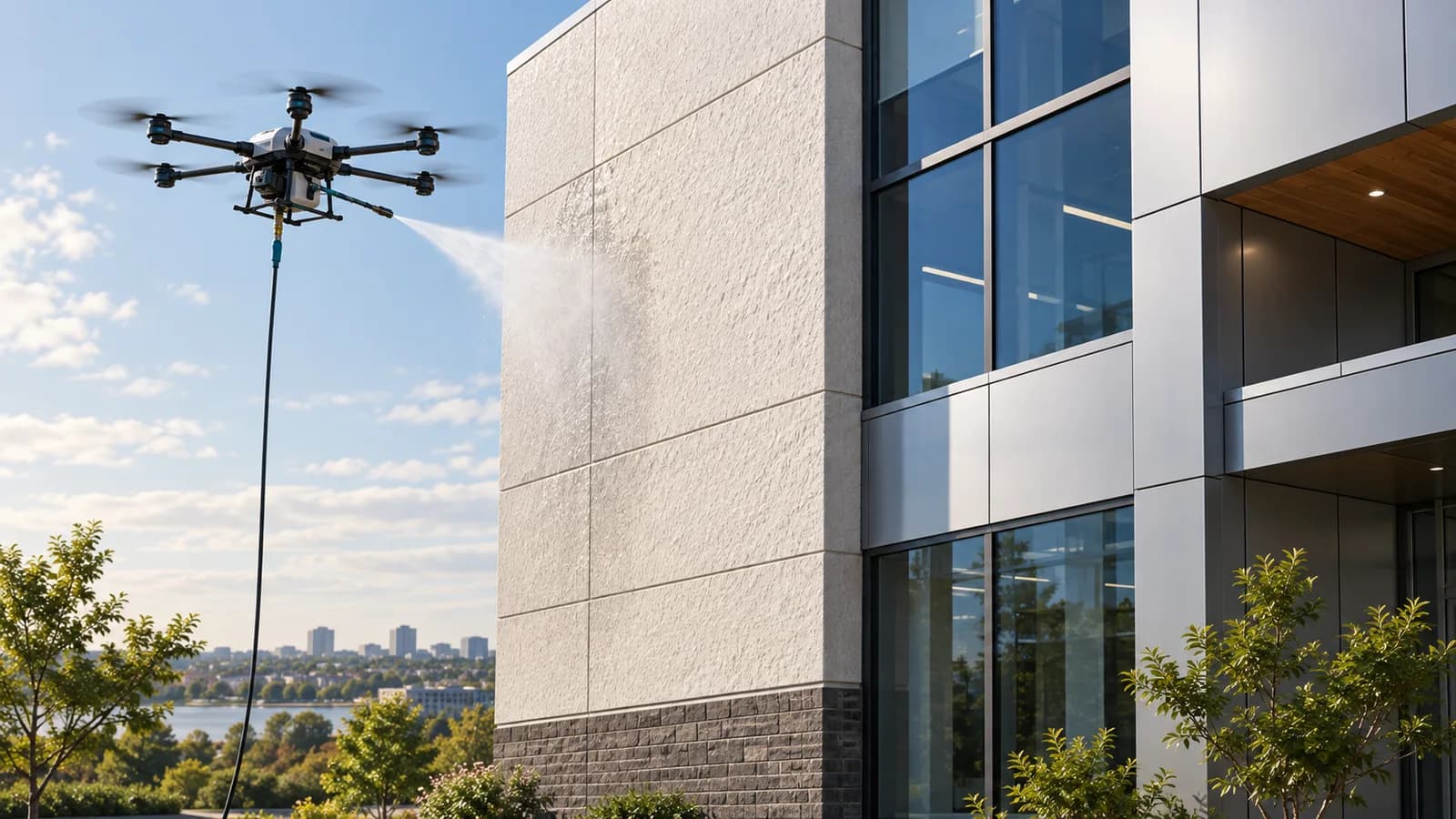
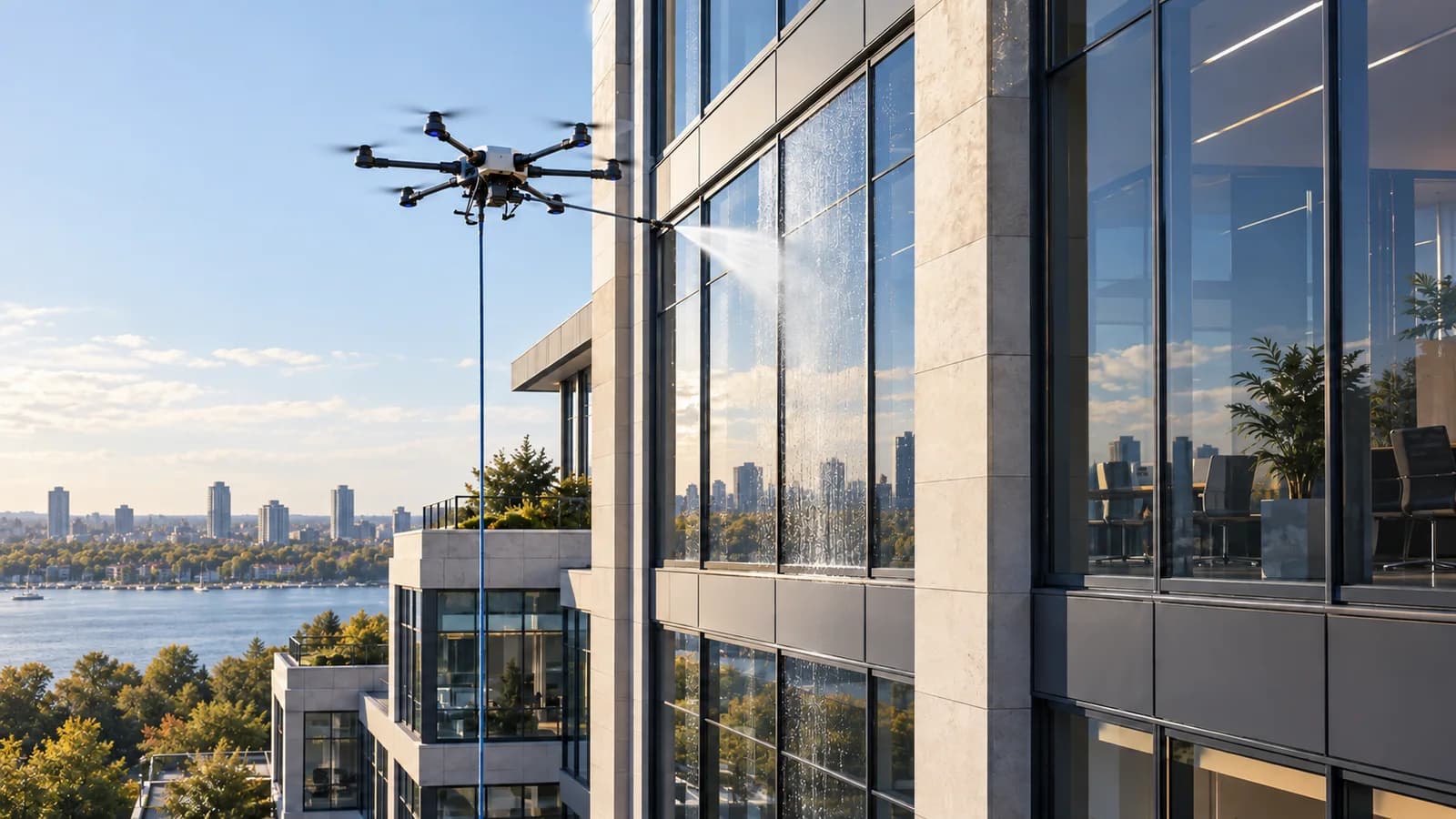
How does a cleaning drone wash the glass?
In a hose-fed cleaning system, the drone positions the cleaning equipment at the elevation while a ground supply provides water. As one manufacturer example, Lucid Bots describes its Sherpa window payload as carrying cleaning solution on the aircraft and receiving water from the ground. This describes that product's arrangement, not a claim about the exact equipment used on every Wash With Drones project.[Lucid Bots]
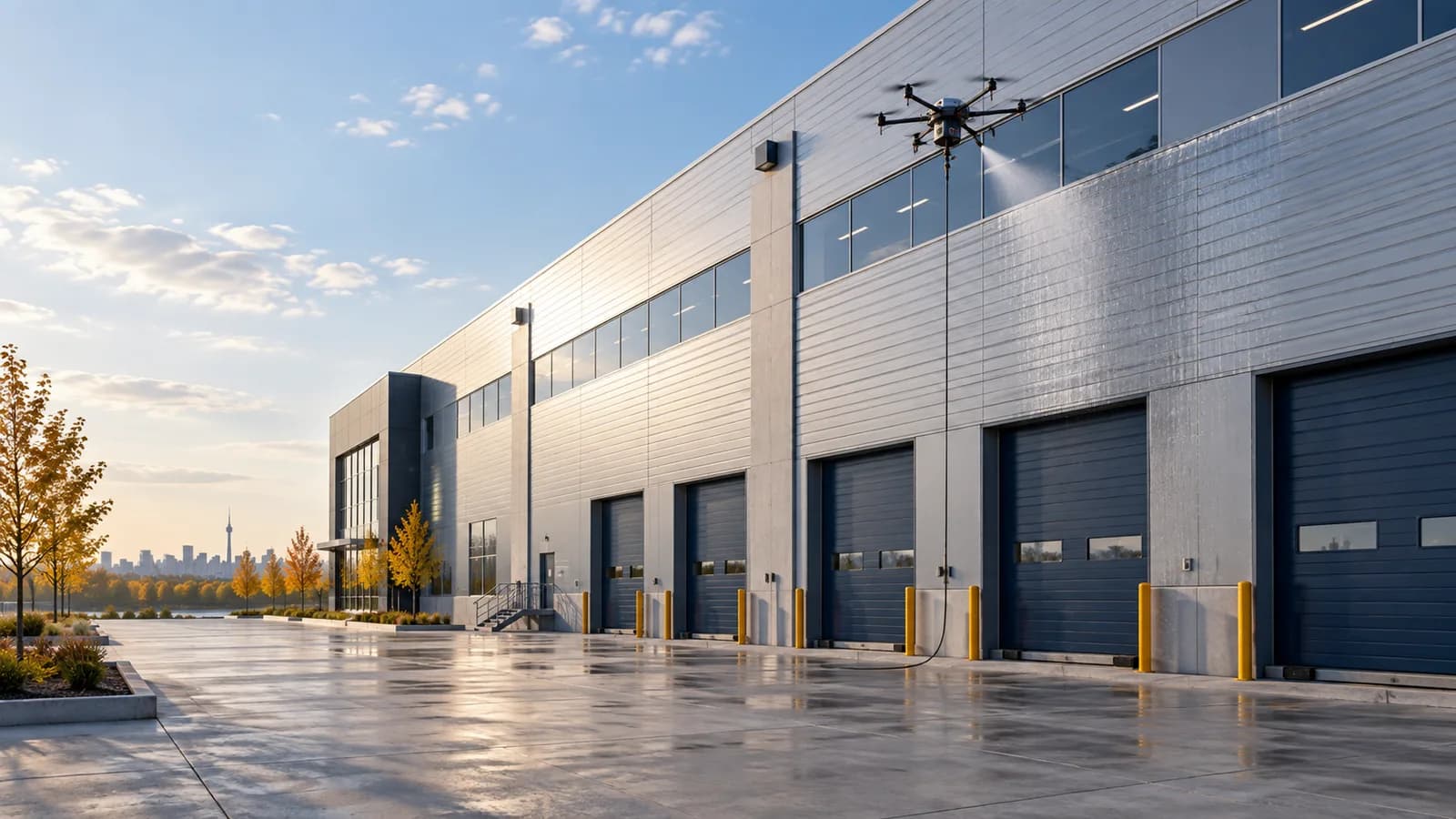
The potential attraction for a property team is changing how suitable high-level wash areas are reached. A broad, unobstructed elevation is a useful candidate for an access comparison: ask whether a drone-led process can reduce the traditional access setup needed for that particular scope, while identifying any areas that still need another method. This is a project question, not a universal cost or safety result.
Compare the whole workflow: setup, washing, rinsing, detailing and inspection. A fast pass over an elevation is only valuable if it produces the agreed result and does not simply move unfinished work into a second appointment.
Start with the glass, not the spray equipment
Pilkington's general guidance recommends non-abrasive cleaning and identifies special considerations for particular glass products. Its separate Activ guidance illustrates why the exact coating matters: cleaning procedures for one product should not be treated as permission to use the same technique on all commercial glazing.[Pilkington][Pilkington]
Before a contractor selects a method, provide whatever glazing information is available: manufacturer, coating, films, age, previous treatments and known damage. If the specification is missing, say so. Guessing from the appearance of a reflective pane is not a substitute for identifying it.
Ask how adjacent components will be considered too. A single elevation can include glass, painted framing, gaskets, sealants, signs and stone. The quote should explain whether frames and sills are included, not leave that question until the glass has dried.
Water quality matters, but it is not a universal cure
Pilkington notes that spraying tap water onto hot Activ glass can leave mineral spots as the water evaporates. Its care document also describes rinsing with soft water. This is a product-specific example of why water, surface temperature and drying conditions belong in the cleaning discussion.[Pilkington]
A contractor using purified water should still be able to explain the proposed rinse and the result you can reasonably expect. Ask whether the final inspection takes place after drying. Wet glass can make it difficult for an owner to agree which marks were actually removed.
Do not equate a rinse-water claim with removal of every existing deposit. In your scope, distinguish loose surface dirt from persistent spotting, adhesive residue, paint and other bonded contamination. Identify the areas for a sample clean and agree what will happen if those marks remain.
A better way to brief the contractor
Use this enquiry matrix to describe the outcome, rather than requesting a cleaning technology in isolation. It is a planning aid, not a material-compatibility approval.
Scroll the table sideways to compare all columns.
| What you see | What to ask for | What to clarify |
|---|---|---|
| General visible dirt | A representative maintenance-clean sample | Expected dry finish and inspection point |
| Persistent spots or streaks | Separate assessment of the marks | Treatment, exclusions and any hands-on work |
| Paint, tape or construction residue | A distinct post-construction scope | Approved removal method for the glass product |
| Dirty frames and recessed edges | Itemised detailing | Which frame faces, sills and corners are included |
On an Ontario site, look beyond the façade
Transport Canada bases operational categories on factors including aircraft weight, proximity to people and airspace. A building owner's permission does not, by itself, settle the aviation requirements for a cleaning flight.[Transport Canada]
Ask the contractor to identify the operating area, the entrances affected and who will coordinate building access. For an occupied office, a small scheduling change may be more useful than an ambitious promise of zero disruption.
In Toronto, the City's outdoor-washing guidance says wash wastewater must be kept out of catch basins, including when water alone dislodges contaminants. Runoff planning therefore belongs in the enquiry, not just the equipment setup.[City of Toronto]
Agree how the result will be accepted
Before work starts, choose a sample area that represents the real job: similar glazing, similar exposure and a useful mix of ordinary dirt and problem marks. A convenient ground-floor pane may not represent the whole elevation. Record the agreed standard with clearly identified photographs.
The handover should identify the areas completed, agreed exclusions and any follow-up required. Where a persistent mark remains, a useful record distinguishes an excluded deposit from an area that still needs ordinary cleaning. That is more actionable than an unqualified claim that the building is finished.
For repeat visits, retain the same elevation names and photo positions. A simple, consistent record gives the property team something meaningful to compare next time without presenting a single visit as proof of long-term performance.
Common questions
Will drone washing remove hard-water stains?
Do not assume it will. Persistent mineral marks should be assessed and priced separately from a routine wash, with a method appropriate to the specific glass and coating.
Can drone cleaning replace every lift or rope-access visit?
No. Direct-access detailing, inspection and particular deposits may still need hands-on work. Compare complete scopes, including those tasks, rather than access equipment alone.
What should I send for an Ontario window-cleaning quote?
Send the address, approximate glass area and height, optional photographs or a scope document, glazing information if known, and notes about access, timing and problem marks. Include both your phone number and email.
FOLLOW THE EVIDENCE
Sources & further reading
Source-checked September 11, 2026. Manufacturer guidance applies to the products it describes. Planning recommendations are our synthesis, not claims of independent testing or documented project results.
- Sherpa cleaning drone: manufacturer description of the window-cleaning systemLucid Bots
- Window FAQs: cleaning of glassPilkington
- Maintenance and Hand Cleaning of Pilkington Activ self-cleaning glass, ATS-166Pilkington
- Drone operation categories and pilot certificatesTransport Canada
- Washing Cars & Outdoor Surfaces: business wastewater requirementsCity of Toronto