FAÇADES & MATERIALS · RESEARCH-LED EXPLAINER
Drone façade cleaning: protecting cladding, coatings and the building envelope
A material-first approach to drone façade cleaning: coated metal, EIFS, test areas, defects and the questions Ontario property teams should ask.
THE SHORT ANSWER
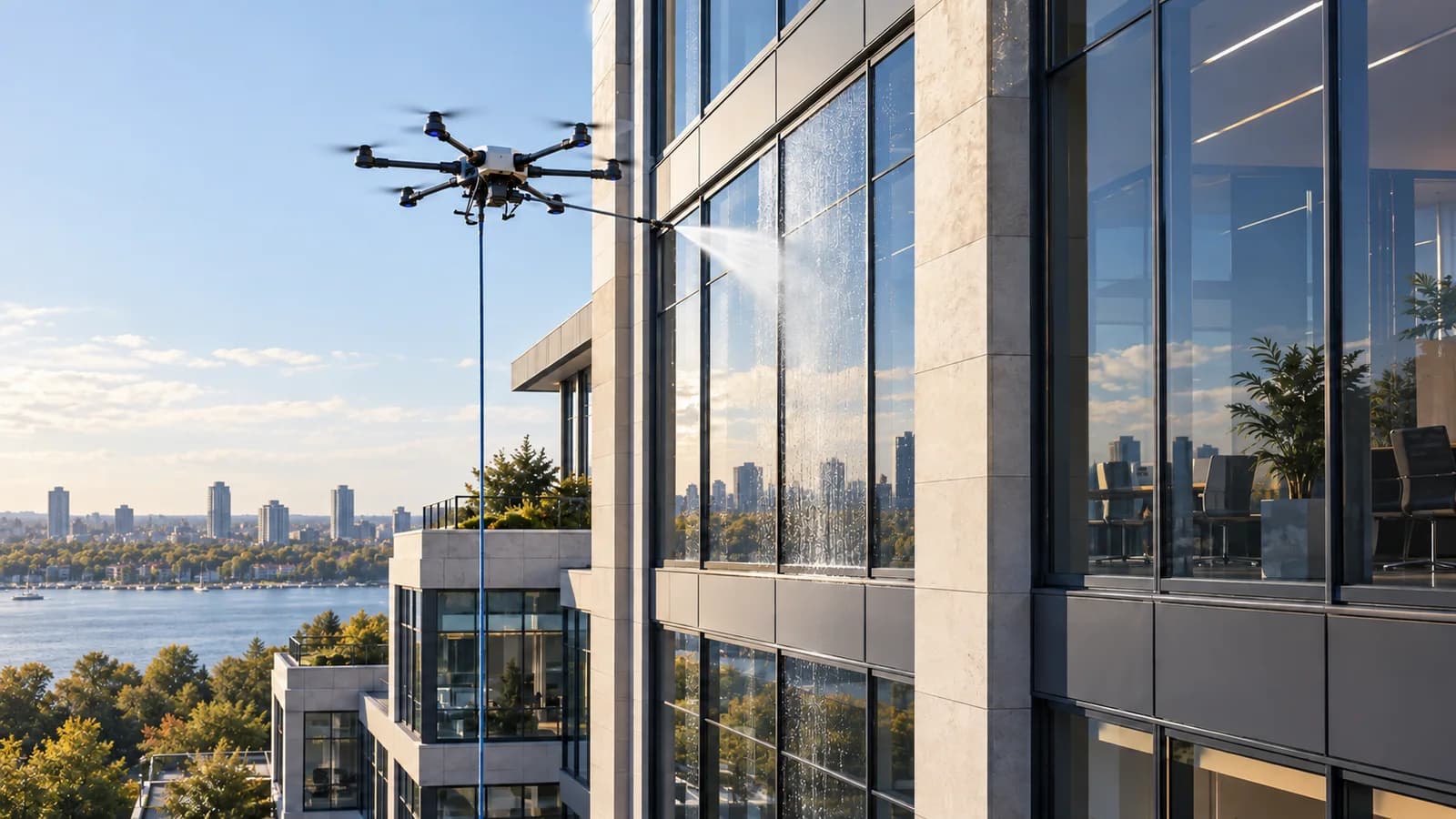
A façade should be assessed by material, coating and condition before a cleaning method is selected. Drone access does not make every pressure, chemical or spray pattern appropriate. Manufacturer instructions, a representative test and a clear plan for defects are the starting points.
Make a material map before requesting a price
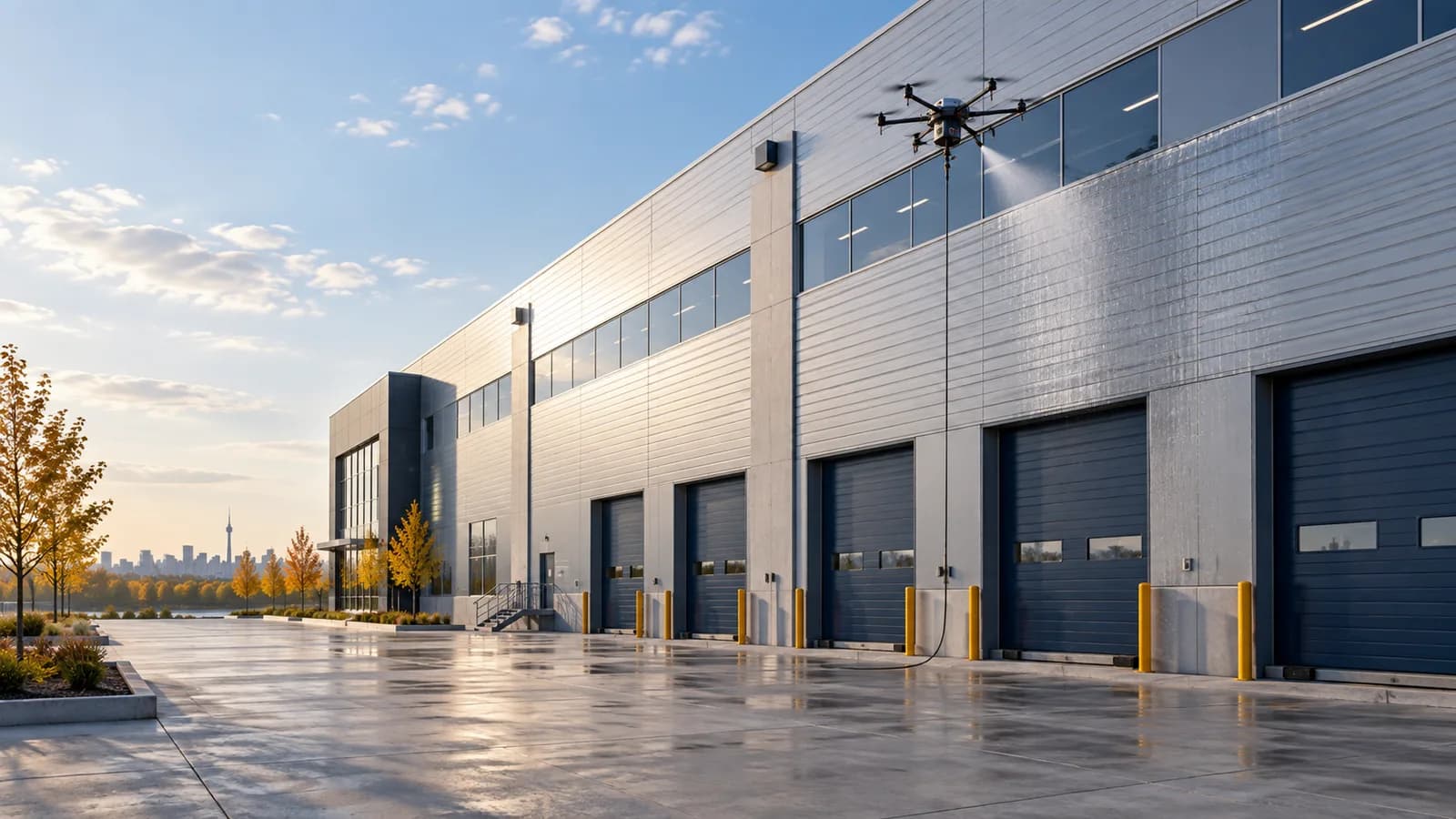
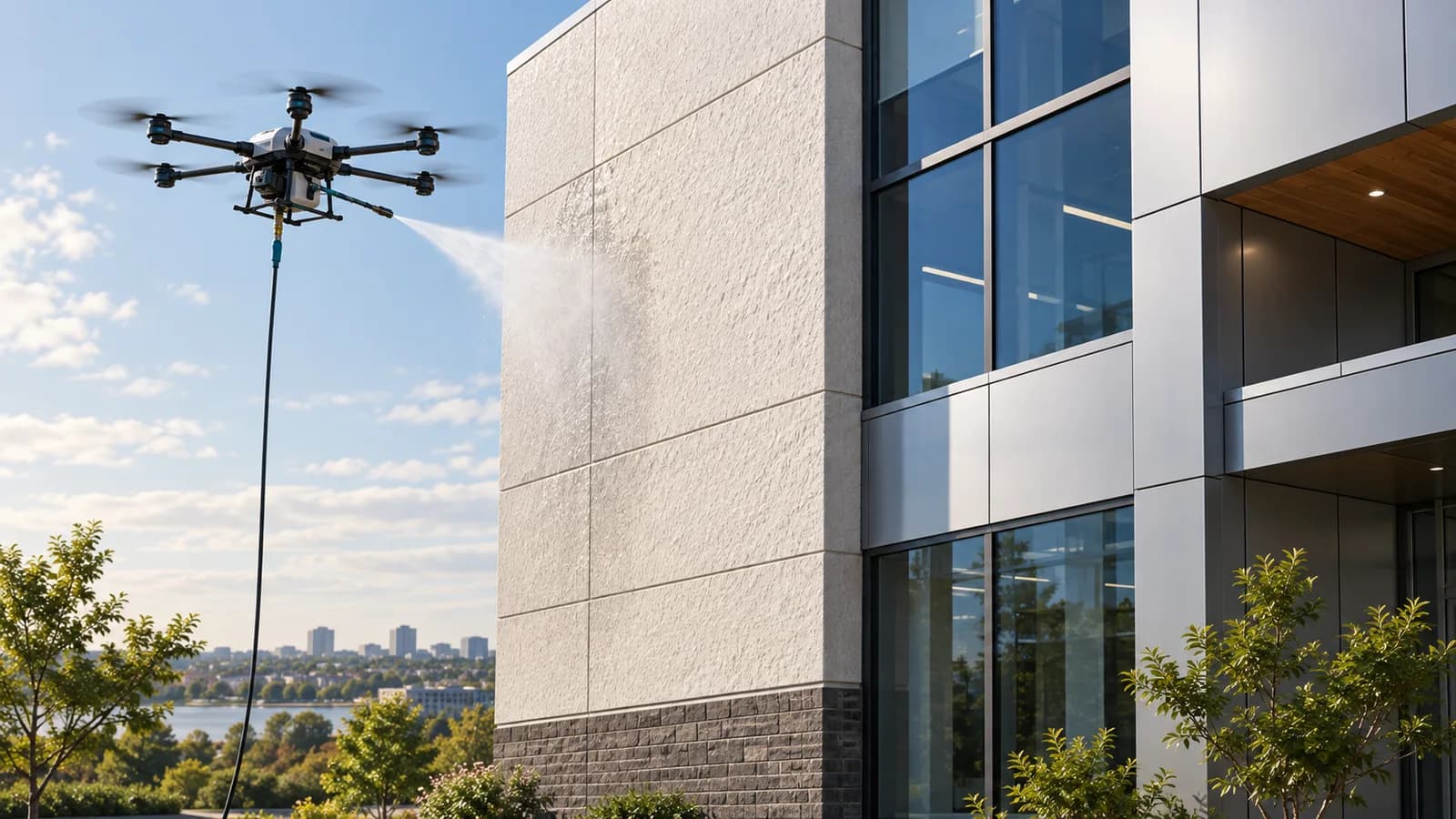
A modern building can look uniform from the street while combining coated metal, glass, textured finishes, masonry and sealant joints. A quote expressed only as square metres of wall can conceal important differences. Our recommendation is to mark the materials on elevation photographs and ask the contractor to price the cleaning zones explicitly.
Record what is known and what is uncertain. A description such as textured white wall is useful for an initial conversation but is not a product specification. Original construction documents, façade-maintenance records and supplier information can reduce that uncertainty before a method is approved.
Also mark interfaces: windows, vents, signs, louvers, doors, exposed services and landscaped edges. These are not blank areas between the surfaces being cleaned. They help define where the proposed wash needs additional coordination or a different approach.
Coated metal needs coating-specific instructions
Sherwin-Williams' architectural metal-maintenance guidance directs owners toward approved products, techniques and procedures for its coil- and extrusion-coated surfaces. The important distinction is that the finish, not simply the metal underneath, helps determine the cleaning approach.[Sherwin-Williams]
For a building with coated panels, ask for the coating identity, previous cleaning history and any warranty-care instructions. Request clarification of chalking, staining or colour changes before treating all discolouration as removable dirt. A wash proposal should not quietly become a coating-restoration promise.
A useful tender question is: what evidence supports this method on our coating? A supplier instruction, a documented test and a clearly stated limitation are more helpful answers than a general claim that the process works on metal buildings.
EIFS is not interchangeable with a hard masonry wall
Dryvit's published maintenance procedures distinguish applying cleaning solution from rinsing, warn against excessive pressure and recognise that some areas may need gentle physical agitation. They also discuss the effect of heat, sunlight and wind on cleaning-solution drying. Those instructions concern Dryvit systems; they are not a universal recipe for every textured façade.[Dryvit]
The practical implication for drone assessment is to compare the proposed process with the installed system's requirements. If the approved method needs work the drone setup cannot perform reliably, include another access method or revise the scope. Do not increase intensity merely to preserve an all-drone plan.
Keep application, dwell time, rinse and inspection as separate questions in the method discussion. This makes it easier to spot gaps than asking only whether the contractor uses low pressure, a description that is incomplete without the surface and equipment context.
Separate cleaning from investigation and repair
Visible cracking, failed joints, loose components or unexplained staining should be recorded before cleaning is authorised. Our planning recommendation is to give the property team a way to stop and refer uncertain areas for assessment, instead of allowing a cosmetic-cleaning brief to absorb a building-envelope problem.
This does not mean every blemish requires a major investigation. It means distinguishing three decisions: what can be cleaned as scoped, what needs a test, and what needs the owner or a relevant specialist to decide before washing continues. Photographs with location references make those decisions easier to communicate.
Scroll the table sideways to compare all columns.
| Record | Why it belongs in the brief | Decision to agree |
|---|---|---|
| Material and finish | Avoid treating unlike surfaces as one | Applicable manufacturer instructions |
| Existing marks and damage | Distinguish cleaning from repair | Proceed, test or refer for assessment |
| Windows, joints and openings | Define interfaces and exclusions | Protection and method boundaries |
| Sample-clean result | Set a realistic appearance target | Accepted finish after drying |
Choose a sample that can actually inform the job
A meaningful trial needs an agreed location, method and acceptance point. Include more than the easiest panel if the building has several materials or distinct types of staining. Record which combination was tested so the result is not later applied to a different coating by assumption.
Review the sample after it has dried and under conditions that let the owner inspect the appearance. Agree who can approve the result, what counts as an unacceptable change, and whether the rest of the elevation is sufficiently comparable to proceed. This is a project decision, not a guarantee that every historic stain will disappear.
Include the ground and the handover in the scope
Toronto's outdoor-washing guidance requires keeping wash wastewater out of catch basins. A façade-cleaning proposal should identify how runoff will be addressed for the site, with the relevant municipality's rules checked outside Toronto.[City of Toronto]
Ask for an elevation-by-elevation completion record, the test-area decision, products used and unresolved observations. Those records help the next maintenance visit begin with useful information rather than a fresh guess about the wall.
The right outcome is a cleaner façade within a method that respects the actual building. A drone can be part of that plan; it should not be the reason to ignore material differences, expand an untested process or blur the boundary between cleaning and restoration.
Common questions
Is drone façade cleaning the same as pressure washing?
No. Drone describes the access equipment. The water delivery, product, application method and surface requirements still need to be specified independently.
Can one cleaning method be used across an entire building?
Only if the materials, conditions and relevant instructions support it. Mixed façades may need separate cleaning zones and complementary hands-on work.
Will cleaning repair a damaged façade?
A cleaning scope should not be represented as repair. Record damage and agree which areas need further assessment before proceeding.
FOLLOW THE EVIDENCE
Sources & further reading
Source-checked September 11, 2026. Manufacturer guidance applies to the products it describes. Planning recommendations are our synthesis, not claims of independent testing or documented project results.
- Coil and extrusion coatings: cleaning and maintenanceSherwin-Williams
- DryvitCARE EIFS Repair Procedures, DS498: periodic cleaningDryvit
- Washing Cars & Outdoor Surfaces: business wastewater requirementsCity of Toronto