ONTARIO PLANNING · RESEARCH-LED EXPLAINER
Planning drone cleaning at an occupied Ontario property: the questions to settle first
A practical Ontario property-manager brief covering drone operations, airspace, people, weather, wastewater and the decisions to agree before exterior cleaning.
THE SHORT ANSWER
Before booking drone-assisted cleaning at an occupied property, agree the exact surfaces, the operator's site assessment, access arrangements, weather decision process and wastewater plan. Property permission and a convenient date do not, on their own, establish that a particular flight or cleaning method is suitable.
There are two plans to review: the flight and the clean
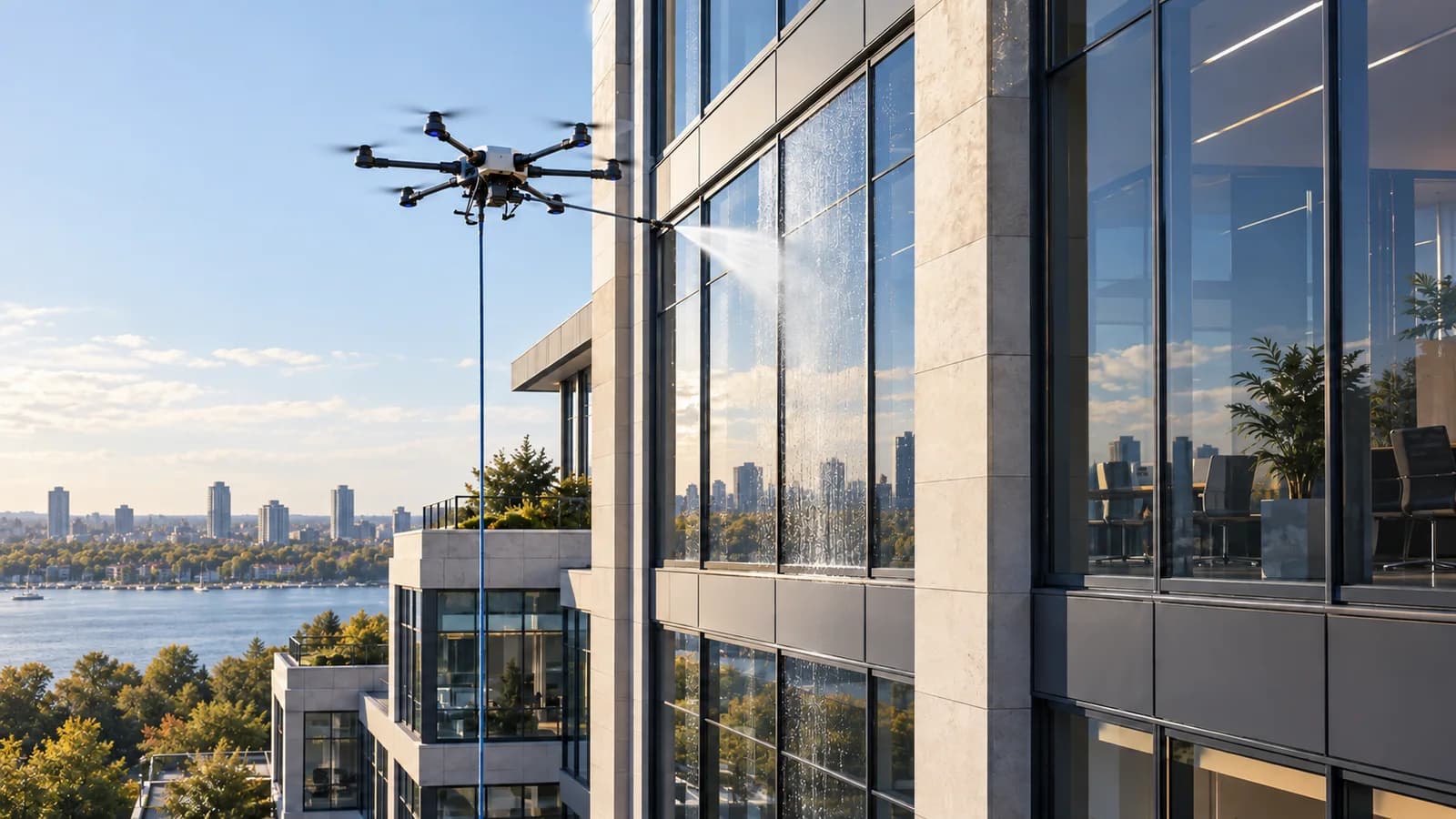
A drone-cleaning enquiry combines two sets of decisions. One concerns operating an aircraft in a particular place. The other concerns washing a particular material around people, property and site activities. A good proposal joins them together without treating success in one as approval of the other.
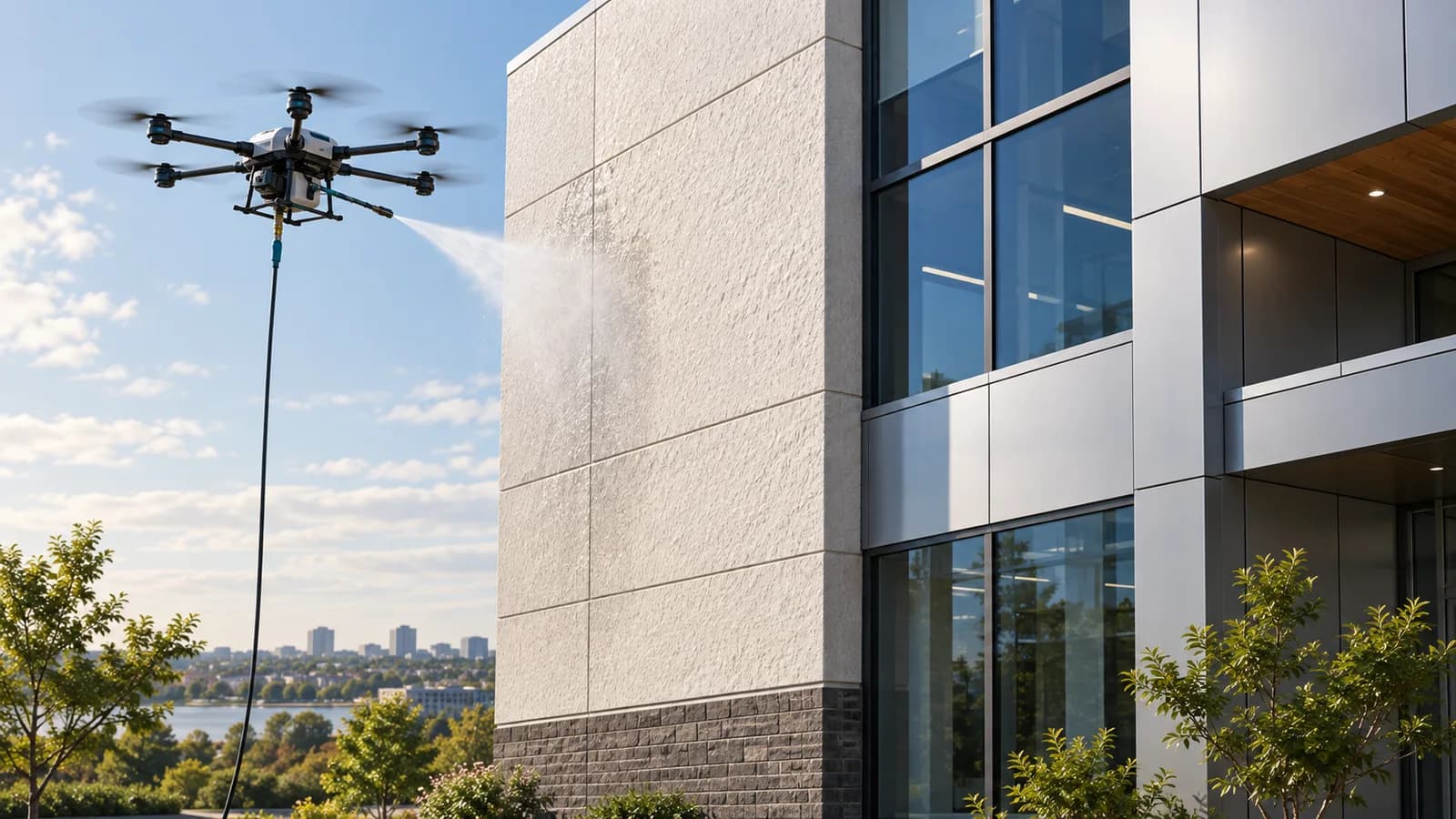
For example, an operator may be able to establish a workable flight area while the intended glass still needs a different cleaning process. Conversely, a suitable façade-washing method does not settle the site's aviation constraints. Ask for both questions to be resolved before the method is described as confirmed.
Our recommendation for the property manager is a single decision sheet: what is proposed, what information is missing, who is responsible for each decision and what must be agreed before the visit. This is a coordination document, not a replacement for the operator's procedures.
Check the operation, not just a certificate label
Transport Canada's current overview distinguishes operations by factors including aircraft weight, safety features, proximity to people and airspace. An advanced pilot certificate is not blanket permission for every commercial activity; the specific operation and aircraft still matter.[Transport Canada]
Transport Canada also requires a survey of the operating area and directs pilots to consider controlled or restricted airspace and nearby aerodromes. Its site guidance identifies tools such as NAV Drone and the NRC Drone Site Selection Tool to support that assessment.[Transport Canada]
The owner's practical question is: what has been established for this address and proposed operation, and what remains conditional? Ask the operator to explain the relevant permissions and responsibilities in the project brief. A familiar company name or a statement that the aircraft is commercial does not answer that question.
This article is an owner's planning overview, not a flight authorisation. The operating team must apply the current rules to the actual aircraft and operation. Follow the linked Transport Canada material rather than an old summary of Canadian drone categories.
Plan around how the building is really used
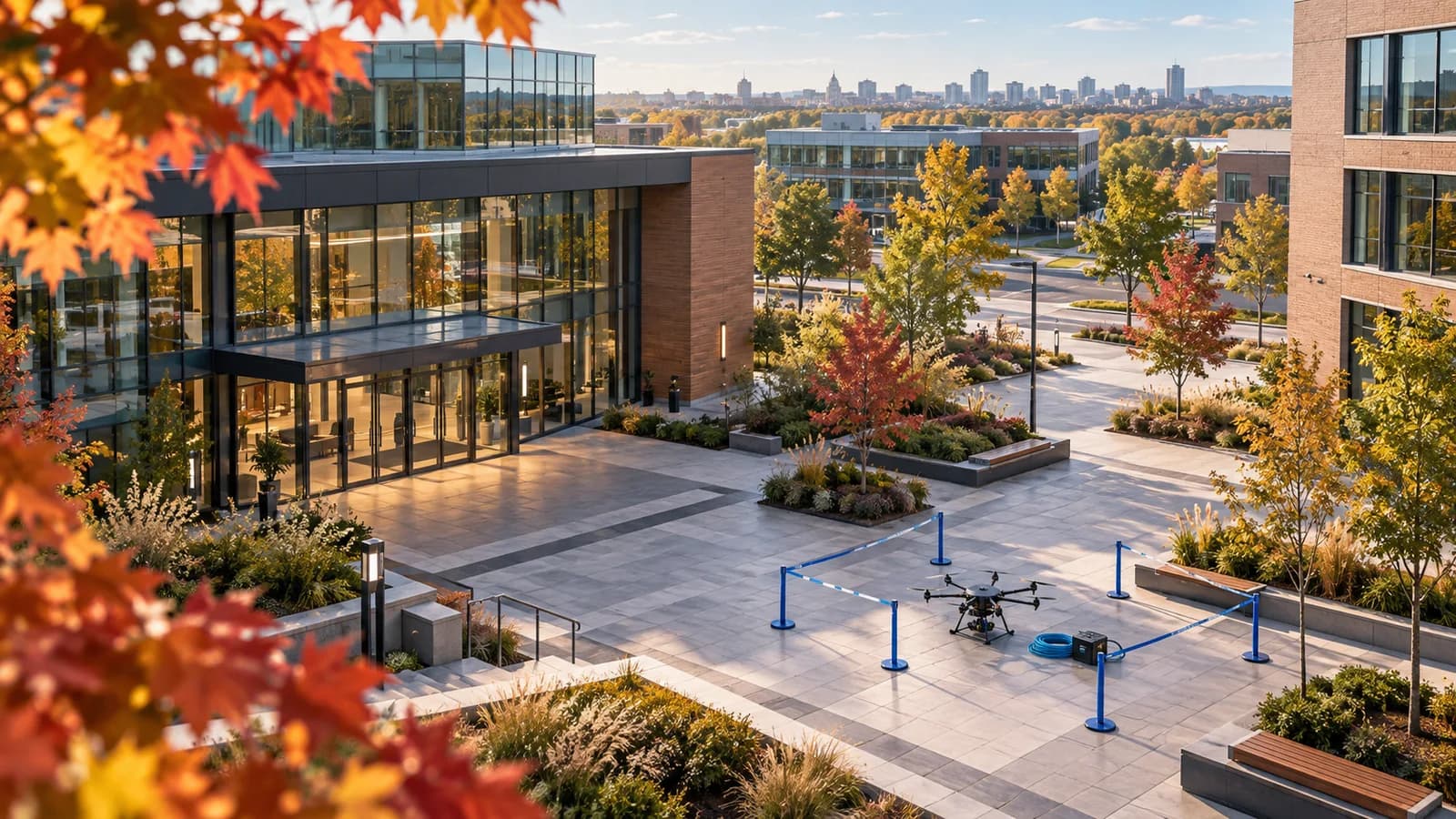
An occupied property is a changing environment. A reception door, accessible route or delivery entrance may need to remain usable even when it sits beside the intended cleaning area. Ask the operator and property team to work from the building's actual daily schedule, including activities that are not obvious from a site photograph.
CCOHS recommends defining the scope of a risk assessment and using relevant information, including manufacturer literature, safety data sheets and observations of the workplace. The property team can contribute its knowledge of tenant activity and site conditions to that process.[CCOHS]
For a condominium, the communication plan may centre on residents and property management. For a hotel, it may centre on arrivals and service routes. For an office, it may centre on commuting periods and tenant access. These are examples for discussion, not evidence that one schedule works for every property type.
Use a short pre-visit decision sheet
Ask the project team to complete these decisions in plain language. If a row is unresolved, give it an owner and a next action instead of assuming it will be handled on the day.
Scroll the table sideways to compare all columns.
| Decision | Question to resolve | Who should be involved |
|---|---|---|
| Scope | Which surfaces, finish and exclusions are agreed? | Property contact and cleaning contractor |
| Operation | What site and aviation conditions apply? | Responsible drone operator |
| People and access | Which routes or activities need coordination? | Operator, property team and affected occupants |
| Weather | Who decides to proceed, pause or reschedule? | Operator and authorised property contact |
| Water | How will supply, runoff and disposal be handled? | Contractor and responsible site personnel |
| Completion | Who reviews the result and reopens affected areas? | Named project contacts |
Do not reduce weather planning to a calendar month
Transport Canada's pilot guidance highlights complex airflow around urban structures. Conditions beside a building can therefore require more consideration than simply reading a general forecast for the city.[Transport Canada]
Ask the operator to define the equipment- and site-specific conditions under which work will proceed, pause or be postponed. The cleaning process has its own material and drying considerations too. There is no useful universal wind limit or all-Ontario cleaning season that this article can set for every setup.
For autumn planning, agree a fallback window and how occupants will receive an updated notice. For any visit where freezing conditions might affect the proposed work, raise that explicitly during assessment. A planned alternative is easier to manage than treating a postponement as an unexpected failure.
Close the loop on water, communication and records
Toronto's outdoor-washing guidance excludes cleaning wastewater from catch basins. Confirm the applicable local requirements and disposal arrangements for the site.[City of Toronto]
Before the appointment, name the person who can authorise changes to access or scope. Share a clear contact route with the operator and affected building personnel. Where a tenant or visitor raises a concern, there should be an agreed way to refer it to the responsible team.
After the visit, retain the agreed scope, areas completed, sample-clean decision where relevant, photographs and unresolved observations. These records are useful whether the work was entirely drone-assisted or combined several methods. They turn a one-off appointment into information for the building's next maintenance decision.
The strongest brief is not the longest. It is the one that makes responsibility, scope and uncertainty visible while there is still time to act on them. That is a better foundation for an occupied-property cleaning project than a promise that the equipment alone will make every constraint disappear.
Common questions
Is a property owner's permission enough to fly a cleaning drone?
No. The operator must establish the applicable aviation requirements for the aircraft, operation and location, as well as coordinate use of the property.
Does every job require the same certificate or permission?
No. Canada's operational categories depend on the actual operation and aircraft. The operator should explain which requirements apply to the proposed job.
Can we book a fixed date with no weather contingency?
A target date can be agreed, but the proposal should explain the decision process and rescheduling arrangements if conditions are unsuitable.
FOLLOW THE EVIDENCE
Sources & further reading
Source-checked September 11, 2026. Manufacturer guidance applies to the products it describes. Planning recommendations are our synthesis, not claims of independent testing or documented project results.
- Drone operation categories and pilot certificatesTransport Canada
- Where to fly your drone: site surveys and airspaceTransport Canada
- Hazard and Risk: Risk AssessmentCCOHS
- Tips and best practices for drone pilots: urban airflowTransport Canada
- Washing Cars & Outdoor Surfaces: business wastewater requirementsCity of Toronto